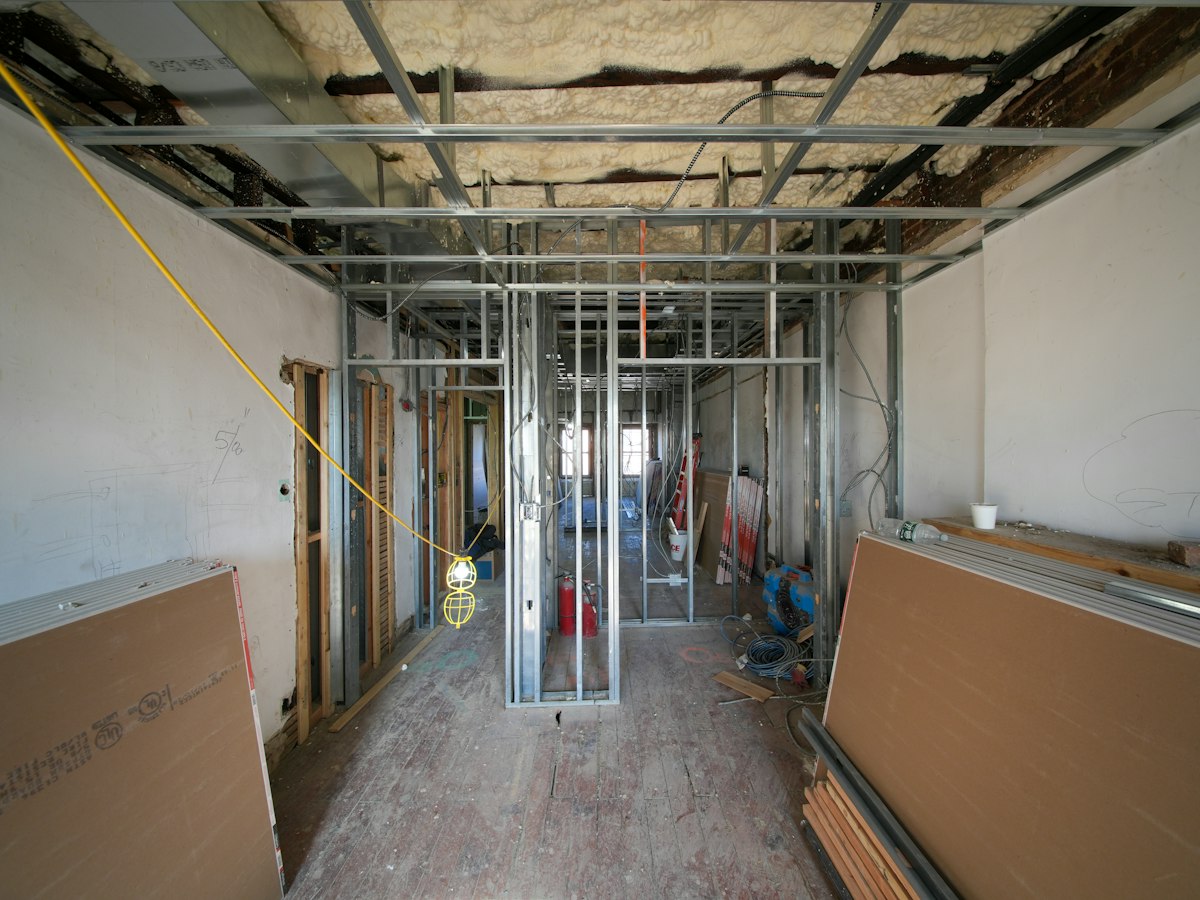
Financing Your Fixer-Upper: How to Secure a Loan to Buy a House and Fix It Up
Finding a home that checks every box in a competitive real estate market is often impossible. You might find a property in the perfect school district with the ideal backyard, but the kitchen is a relic from the 1970s and the roof is nearing the end of its life. For many buyers, the solution isn't to keep searching for a finished home, but to find a property with potential and customize it. However, the biggest hurdle is usually the math: how do you afford both the purchase price and the high cost of renovations at the same time?
Standard mortgages are designed for homes that are already in good condition. If a house has significant issues, a traditional lender might even refuse to finance it because the collateral doesn't meet their standards. This leaves buyers in a difficult spot, forced to choose between a turnkey home they don't love or a fixer-upper they can't afford to repair. This is where renovation-specific financing changes the game by allowing you to bundle the purchase price and the renovation costs into a single monthly payment.
Related posts

Leveraging Real Estate Equity: A Deep Look at a Secured Loan Against Property
Owning a home or a commercial building is often seen as the peak of financial stability. But what...
Read more →
Leveraging Home Equity: How Secured Loans on Property Work for Borrowers
When you need to borrow a significant amount of money—perhaps for a major home renovation or to consolidate...
Read more →
Leveraging Your Home's Equity: Understanding a Loan Against House Property
When significant financial needs arise, whether for business expansion, a child's education, medical emergencies, or consolidating existing debts,...
Read more →Funding Your Home Renovation: Understanding Your Loan Options
The vision of a revitalized home often begins with a spark: a new kitchen, an expanded living space,...
Read more →In this article, we will examine the specific loan products available for those looking to buy and renovate. We will cover the differences between government-backed options and conventional programs, the requirements for contractors, and the step-by-step process of managing a renovation mortgage. By understanding these financial tools, you can stop looking for a perfect house and start looking for the potential to create one.
Whether you are a first-time buyer looking for an affordable entry point or a seasoned homeowner wanting to build equity quickly, a loan to buy a house and fix it up provides a structured path to homeownership. We will break down the eligibility criteria, the costs involved, and the practical realities of managing a construction project alongside your mortgage application.
Key takeaways
- Renovation loans allow you to borrow based on the "as-completed" value of the home, not just its current state.
- The FHA 203(k) loan is the most accessible option for buyers with lower credit scores or smaller down payments.
- Fannie Mae HomeStyle and Freddie Mac CHOICERenovation offer more flexibility for luxury upgrades and higher-value properties.
- Lenders require detailed contractor bids and will pay the renovation funds in stages known as "draws."
The Reality of Buying a Fixer-Upper
The idea of buying a "diamond in the rough" is popular, but the financial execution is often misunderstood. Most people assume they need a massive pile of cash sitting in a savings account to handle the repairs. While cash is king, it isn't the only way. A loan to buy a house and fix it up effectively lets you borrow against the future value of the property. This is a fundamental shift from traditional lending, where the loan amount is strictly tied to the current appraisal.
When you use a renovation mortgage, the lender hires an appraiser to look at the house in its current state and review your contractor's plans. The appraiser then determines what the home will be worth once all the work is finished. This projected value is what the lender uses to justify a larger loan. This allows you to tackle major projects like foundation repair, electrical overhauls, or complete kitchen remodels immediately after closing.
The FHA 203(k) Renovation Loan
The Federal Housing Administration (FHA) offers the 203(k) program, which is arguably the most common loan to buy a house and fix it up. It is popular because it has lower credit score requirements—often as low as 580—and a low down payment of 3.5%. There are two distinct versions of this loan depending on the scale of your project.
Limited 203(k) Mortgage
The Limited 203(k) is designed for minor remodeling and non-structural repairs. You can borrow up to $35,000 in renovation funds. This is perfect for cosmetic updates like new flooring, painting, replacing appliances, or basic kitchen and bathroom refreshes. The process is faster and requires less paperwork than the standard version, but it cannot be used for structural changes like moving walls or adding a second story.
Standard 203(k) Mortgage
The Standard 203(k) is for major projects. There is no set dollar limit on the repairs, other than the overall FHA loan limits for your specific county. This loan can be used for structural repairs, additions, and even complete tear-downs as long as the original foundation remains. Because of the complexity, the Standard 203(k) requires you to work with a HUD-approved consultant who manages the inspections and ensures the work meets safety standards.
Fannie Mae HomeStyle Renovation
If you have a higher credit score, usually 620 or above, the Fannie Mae HomeStyle loan is a powerful alternative. Unlike the FHA version, HomeStyle is a conventional loan. One of its primary advantages is flexibility. While FHA loans have strict rules about what you can fix (focusing on health and safety), HomeStyle allows for luxury items. If you want to put in a swimming pool, build an outdoor kitchen, or add high-end landscaping, this is the loan to buy a house and fix it up that you should consider.
HomeStyle also has different mortgage insurance requirements. With an FHA loan, you pay mortgage insurance for the life of the loan in most cases. With a conventional HomeStyle loan, you can eventually cancel the private mortgage insurance (PMI) once you reach 20% equity. This can save you thousands of dollars over the long term.
Freddie Mac CHOICERenovation
Freddie Mac offers a similar product called CHOICERenovation. This loan is particularly useful for homes that need to be made more resilient against natural disasters or for adding accessory dwelling units (ADUs). As multi-generational living becomes more common, the ability to finance the construction of an in-law suite or a basement apartment into the initial purchase mortgage is a significant benefit. Like HomeStyle, it requires a higher credit score but offers competitive rates and the potential to eliminate mortgage insurance later.
VA Renovation Loans for Veterans
For eligible veterans and active-duty service members, the VA Renovation loan offers a 0% down payment option. This is incredibly rare in the renovation space. However, these loans are often restricted to minor, non-structural repairs. Not all VA-approved lenders offer the renovation component, so you may need to shop around to find a specialist who understands the specific requirements of the Department of Veterans Affairs.
The Step-by-Step Process of Securing the Loan
Securing a loan to buy a house and fix it up involves more moving parts than a standard home purchase. You aren't just proving your income and credit; you are also proving the viability of the renovation project itself. Here is how the process typically unfolds.
1. Getting Pre-Approved
Start by finding a lender that specializes in renovation products. Not every bank offers them because they require more administrative work. Get a pre-approval that specifically mentions the renovation program so you know exactly how much you can spend on the combined purchase and repair budget.
2. Finding the Right Property
When you look at houses, bring a contractor or a knowledgeable friend. You need to estimate the costs quickly. If a house is listed for $200,000 and needs $50,000 in work, your total loan will be $250,000. You must ensure that the final value of the home will support that total amount.
3. Hiring a Licensed Contractor
Lenders generally do not allow for "sweat equity" or DIY work on these loans. They want to ensure the work is done to code and finished on time. You must provide the lender with a detailed bid from a licensed and insured contractor. This bid must include a line-item breakdown of materials and labor costs. The lender will vet the contractor to ensure they have the proper credentials and a clean history.
4. The As-Completed Appraisal
Once the lender has the purchase contract and the contractor's bid, they order the appraisal. The appraiser evaluates the home as it sits today and then adds the value of the proposed improvements. This is a pivotal moment in the process; if the appraisal comes back low, you may have to reduce the scope of the renovation or bring more cash to the closing table.
5. Closing and the Escrow Account
At closing, the seller is paid the purchase price, and the remaining funds for the renovation are placed into a managed escrow account. You don't get this money directly. Instead, the lender or a third-party consultant manages the funds to ensure the work is actually being completed.
Managing the Renovation Phase
After closing, the clock starts ticking. Most lenders require the work to begin within 30 days and be completed within six months. As the contractor completes specific phases of the project, they request a "draw." An inspector will visit the property to verify that the work is done correctly, and then the lender releases a portion of the funds from the escrow account to pay the contractor.
It is important to include a contingency reserve in your budget. Most renovation loans require you to set aside 10% to 20% of the repair costs for unexpected issues. When you open up walls in an old house, you might find plumbing leaks or electrical hazards that weren't visible during the initial inspection. The contingency reserve ensures the project doesn't stall when surprises happen.
Comparing the Costs: Is It Worth It?
A loan to buy a house and fix it up usually carries a slightly higher interest rate than a standard mortgage—typically about 0.25% to 0.75% higher. You will also pay higher closing costs because of the specialized appraisal and the fees for managing the renovation escrow. However, these costs are often much lower than the alternative: taking out a high-interest credit card, a personal loan, or a second mortgage later on.
The real financial benefit comes from the immediate equity. If you buy a house for $150,000, spend $50,000 on renovations, and the finished home is worth $230,000, you have essentially "created" $30,000 in equity. This is a powerful way to build wealth, especially in markets where home prices are rising rapidly.
Common Pitfalls to Avoid
The biggest risk in using a renovation loan is the contractor. If your contractor disappears halfway through the job or does poor quality work, it can jeopardize your loan and your home's value. Always check multiple references and ensure they have experience with renovation mortgages. They need to be comfortable with the paperwork and the delayed payment structure of the draw system.
Another pitfall is over-improving for the neighborhood. Even if you love high-end finishes, if you spend $100,000 on a kitchen in a neighborhood where the most expensive home sold for $250,000, the appraisal might not support your loan. Always keep the local market in mind when planning your renovation scope.
Frequently Asked Questions
Can I do the renovation work myself to save money?
Generally, no. Most renovation loans, especially FHA 203(k) and HomeStyle, require the work to be performed by a licensed professional. Lenders view DIY work as a high risk because if the project isn't finished or isn't up to code, the value of their collateral is at risk. Some limited exceptions exist for highly qualified tradespeople, but they are rare.
What is the minimum credit score for a renovation loan?
For an FHA 203(k) loan, you can often qualify with a score as low as 580. For conventional options like Fannie Mae HomeStyle, you typically need at least a 620, though many lenders prefer 680 or higher to offer the best interest rates and terms.
How long does the renovation usually take?
Most lenders require that the renovation work begins within 30 days of closing the loan. The entire project is usually expected to be completed within six months. If the project is massive, you may be able to negotiate a longer timeline, but this must be established during the underwriting process.
Can I buy a house that is currently uninhabitable?
Yes, that is one of the primary purposes of these loans. A standard mortgage requires the home to be in "livable" condition to close. A renovation loan, specifically the Standard FHA 203(k), allows you to buy a property that is currently missing a kitchen, has no running water, or requires major structural repairs, as long as it will be habitable once the work is done.
Do I have to pay my mortgage while the house is being fixed?
Yes, you are responsible for the mortgage payments immediately after closing. However, some loan products allow you to build up to six months of mortgage payments into the loan amount if you cannot live in the home during the renovation. This prevents you from having to pay both a mortgage and rent simultaneously.
Conclusion
Using a loan to buy a house and fix it up is a strategic way to bypass the inventory shortage and create a home that fits your specific needs. While the process involves more paperwork and a stricter oversight of contractors than a traditional mortgage, the ability to finance repairs at a low interest rate is an invaluable financial tool. By selecting the right loan product—whether it is the accessible FHA 203(k) or the flexible HomeStyle renovation—you can transform a neglected property into a high-value asset. Take the time to vet your contractors, understand your local market's price ceiling, and work with a lender who understands the nuances of construction draws to ensure your project is a success.